Red Cherry Intake & Washing Station Operations
Manage washing station cherry delivery weighing, flotation tank sorting, eco-pulping, mucilage fermentation, and raised drying beds.
1. Overview & Business Value#
This comprehensive operational guide details the architecture, business workflows, configuration parameters, and execution steps for Red Cherry Intake & Washing Station Operations within SmartERP.
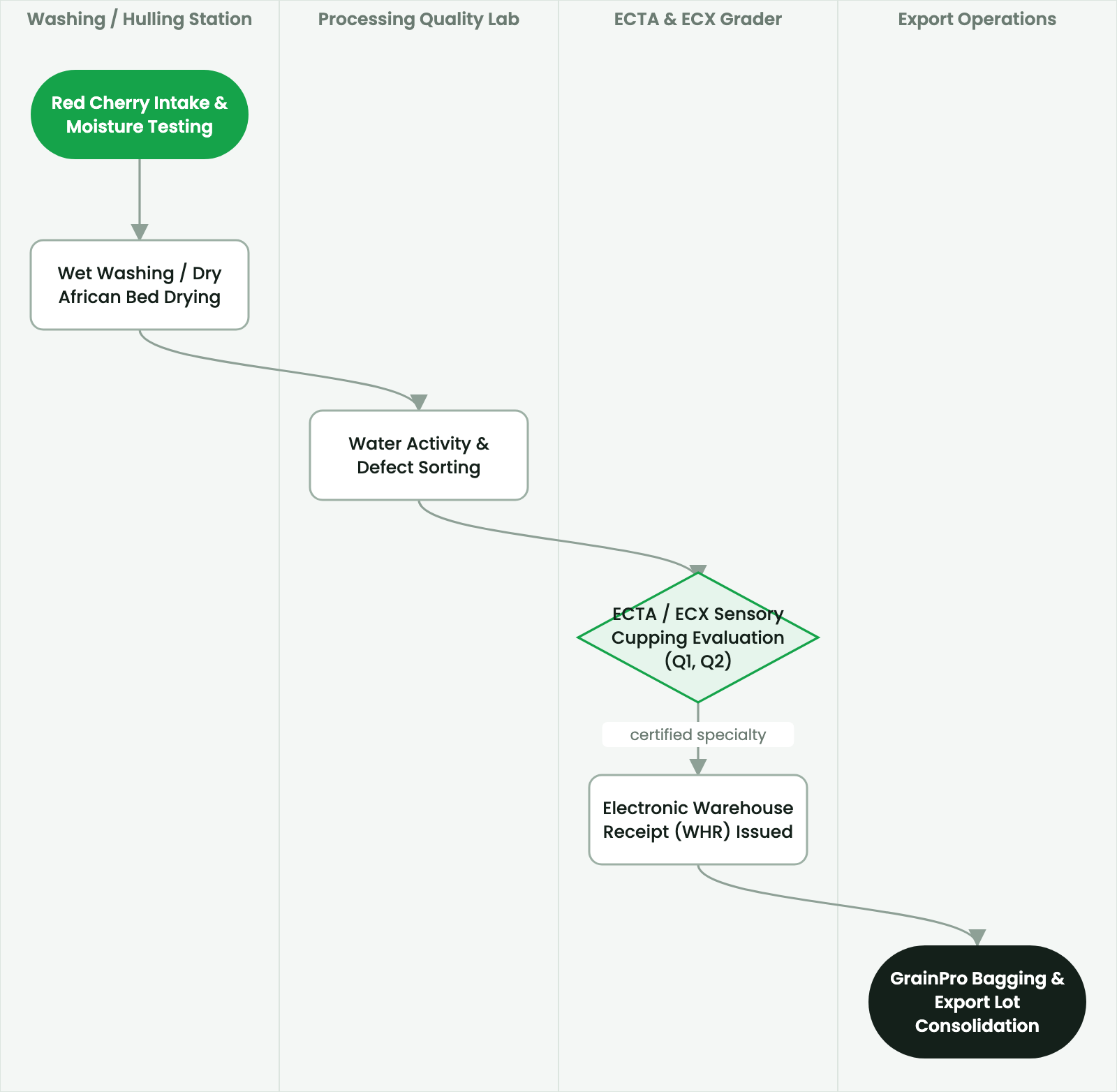
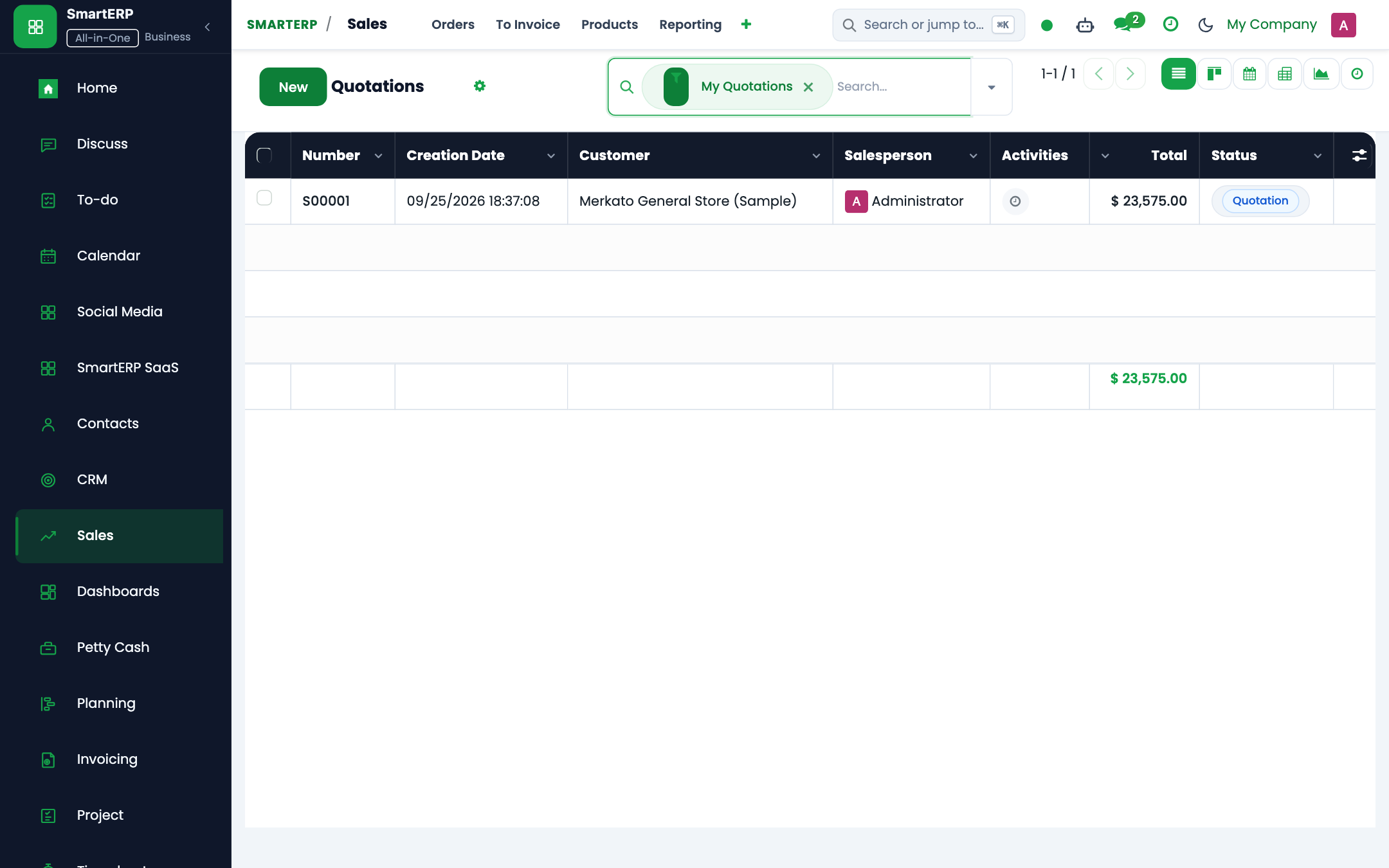
Manage washing station cherry delivery weighing, flotation tank sorting, eco-pulping, mucilage fermentation, and raised drying beds.
2. Prerequisites & Security Access Groups#
- Required Modules:
smarterp_commodity_export, smarterp_agri_traceability - Security Groups:
Export Logistics Officer(Technical ID:smarterp_export.group_export_user)Coffee Quality Lab Grader (Q-Grader)(Technical ID:smarterp_export.group_export_qa)Export Commercial Director(Technical ID:smarterp_export.group_export_manager)
- Master Data Dependencies: Coffee origination zones (Yirgacheffe, Sidama, Guji, Jimma, Harar), ECX contracts, washing stations, export container lots, and NBE 50/50 FX retention accounts.
3. Step-by-Step Configuration & Execution#
Step 1: Navigating to the Interface#
- Log into your SmartERP instance at
https://smarterp.et/odoo. - Open the main App Switcher (grid icon in the top-left corner).
- Navigate to Coffee Export → Origination → Lots.
Step 2: Operational Data Parameters & Controls#
Ensure all mandatory parameters comply with enterprise operational standards:
- Authorized Operator: Action executed under assigned RBAC permissions (Export General Manager, Cupper/Q-Grader, Export Logistics Lead).
- Relational Integrity: Linked to upstream master records, approval requests, or transactional ledgers.
- Statutory & Quality Controls: Verified against Ethiopian statutory regulations and corporate governance standards.
Step 3: Operational Execution & State Progression#
- State Progression Gate: Advance record from Draft through Audited to Confirmed / Certified.
- Integrated System Impact: Automatically updates real-time operational states and posts financial/inventory journal moves.
- Audit Verification: System registers tamper-evident audit records logging user ID, timestamp, and cryptographic transaction digests.
Wet Processing Operations (Washed Coffees)#
Highland washed coffees undergo controlled aqueous fermentation to remove sugary mucilage:
- Flotation Tank Density Sorting: Fresh red cherries are unloaded into water flotation channels. Dense, fully ripe cherries sink to the bottom; unripe, insect-damaged, or dry "floaters" float to the surface and are skimmed off into commercial-grade lots.
- Depulping: Mechanical eco-pulpers peel outer cherry skins without cracking interior parchment beans.
- Fermentation: Depulped beans ferment in concrete tanks for 36 to 48 hours, breaking down pectin mucilage.
- Washing Channels: Beans are agitated in cold spring water channels, separating parchment into density grades (Grade 1 Heavy, Grade 2 Medium, Grade 3 Light).
African Raised Drying Beds Management#
- In Coffee Export > Origination > Drying Bed Matrix, assign washed parchment lots to numbered raised mesh beds (e.g.,
Bed #041 to #052). - Record initial bed loading: 25 kg wet parchment per square meter.
- Moisture monitoring: Field workers turn parchment 4 times daily to prevent mold and cover beds during midday solar peaks ($12:00 - 15:00$).
- System tracks moisture loss curves over 12 to 18 days until moisture reaches the statutory target: 10.5% to 11.5%.
- Once target moisture is achieved, parchment is bagged in clean sisal sacks and transferred to the conditioned station warehouse.
4. Advanced Configuration Points#
- Automated Actions & Scheduled Tasks (Crons):
Export: Track NBE 50/50 FX retention account expiration(smarterp_export.ir_cron_fx_retention): Runs weekly to monitor statutory 30-day conversion windowsTraceability: Monitor container transit milestones(smarterp_export.ir_cron_container_tracking): Runs daily to update Modjo dry port to Djibouti customs handoffs
- Custom Print Templates & Reports:
- ECTA Coffee Quality & Traceability Inspection Dossier
- Export Commercial Invoice, Packing List & Certificate of Origin
- Bole Cargo / Modjo Dry Port Multimodal Shipping Manifest
- NBE Foreign Exchange Retention & Commercial Bank Allocation Slip
- Multi-Company Rules: Record-level security isolation under Company 1 (
Ashewa Technology Solutions S.C.), preventing cross-company ledger leakage across parent and subsidiary legal entities.
5. Comprehensive Troubleshooting Matrix#
| Error Symptom / Exception | Probable Root Cause | Corrective Action / Resolution |
|---|---|---|
FX Retention Block: 50% ETB conversion window expired | Foreign proceeds not converted to local currency within mandatory 30-day window per NBE directives. | Contact commercial bank international banking department to process statutory conversion. |
Quality Grade Rejection: Moisture content exceeds 12.0% | Export sample failed ECTA moisture tolerance threshold. | Return lot to processing facility for further mechanical or sun drying prior to re-sampling. |
Customs Clearance Missing: Phytosanitary certificate not attached | Mandatory Ministry of Agriculture clearance document missing from shipment file. | Complete inspection sampling and attach approved certificate before filing Modjo customs manifest. |
Last updated: 2026-11-15